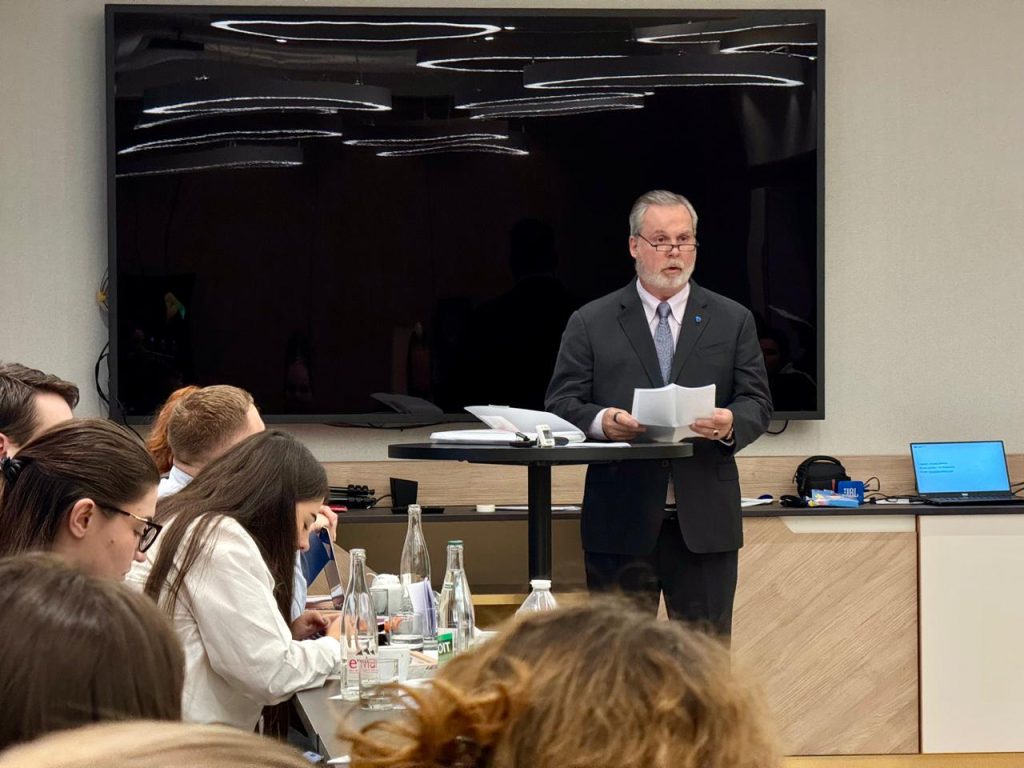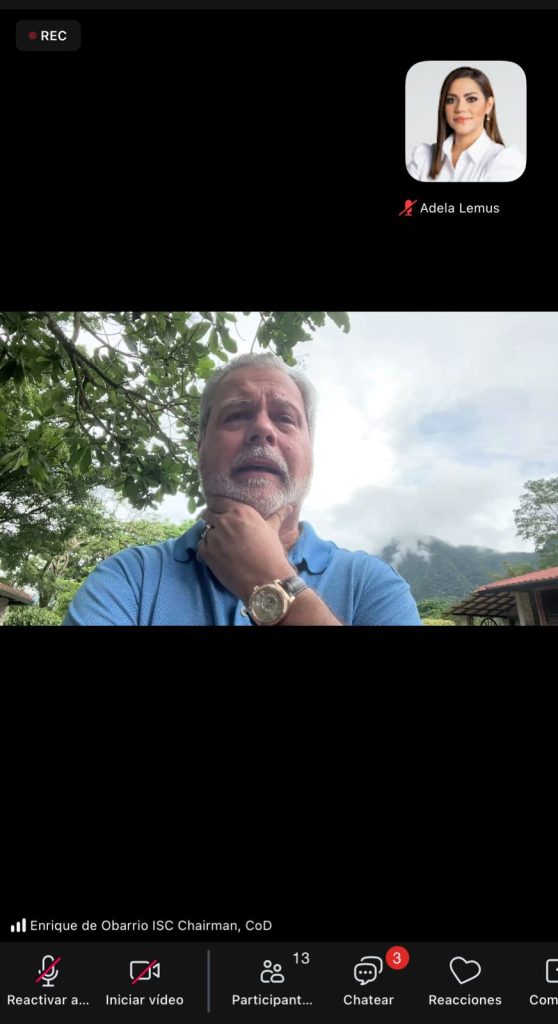
The Civil Society Pillar of the Community of Democracies highlighted a renewed call for innovation and multisectoral cooperation during the 41st Governing Council meeting, held this week in Warsaw. Representing the Latin American and Caribbean Network for Democracy (Redlad) and serving as Chair of the Pillar, Enrique de Obarrio underscored the urgent need to reimagine the way democratic systems are built, protected, and strengthened at a global level.
De Obarrio’s intervention centered on an ambitious initiative titled “Relaunching Democracy: A New Multi-Stakeholder Pathway to Peace.” This proposal seeks to redefine democratic governance by fostering sustained collaboration among diverse sectors — including governments, the private sector, civil society, academia, workers, and youth. According to De Obarrio, such collaboration must be supported by “monitoring mechanisms to measure real results,” ensuring that democratic commitments translate into tangible improvements in people’s lives.
As part of this forward-looking vision, De Obarrio introduced the idea of establishing a Multi-Stakeholder Democratic Innovation Center headquartered at the City of Knowledge in Panama. The Center would serve as a global hub dedicated to designing, testing, and scaling innovative governance tools. Its purpose is to enable countries and communities across regions — from Latin America and the Caribbean to Africa, Asia, Europe, and beyond — to develop practical, cooperative solutions to growing democratic challenges.
The Redlad president stressed that the creation of the Center reflects an urgent international need. “Democracy remains the path to dignity, prosperity, and peace. But we need to innovate and cooperate so that it can once again inspire and deliver results,” he stated, calling for shared responsibility among all democratic actors. He emphasized that democracy cannot rely on governments alone: “It is only strengthened when there is a true alliance with civil society.”
In his remarks, De Obarrio also highlighted the critical pressures facing civil society worldwide, noting that many organizations are confronted with shrinking civic spaces, the freezing of international funds, and the rapid proliferation of restrictive laws. These conditions, he warned, have forced numerous groups to scale back or suspend their activities, weakening citizen participation at a time when it is most needed.
Despite these obstacles, the Civil Society Pillar remained active throughout 2025, advocating for democratic principles and responding to abuses in various parts of the world. The Pillar engaged in key global forums, including the United Nations Human Rights Council, the Organization of American States, the Summit of the Americas, and the EU–LAC civil society dialogue. These efforts reaffirmed the Pillar’s commitment to meaningful participation, accountability, and the defense of fundamental freedoms.
De Obarrio reiterated the importance of the Warsaw Declaration, which continues to guide the Community of Democracies as a foundational framework for democratic institutions and practices. He called on all member states and stakeholders to renew their commitment to its principles, particularly at a moment when democratic norms are under strain across regions.
The meeting in Warsaw also served as a timely moment to spotlight the upcoming presidency of Panama within the Community of Democracies in 2026. De Obarrio noted that this leadership role represents a significant opportunity for the country and for the broader Latin American and Caribbean region to contribute to global democratic renewal. It also provides momentum for advancing the proposed Democratic Innovation Center as a platform for international cooperation.
With the “Relaunching Democracy” proposal, the Civil Society Pillar reinforces its message: safeguarding democracy requires creativity, unity, and shared responsibility across sectors and continents.