Strasbourg, France – January 16, 2026.
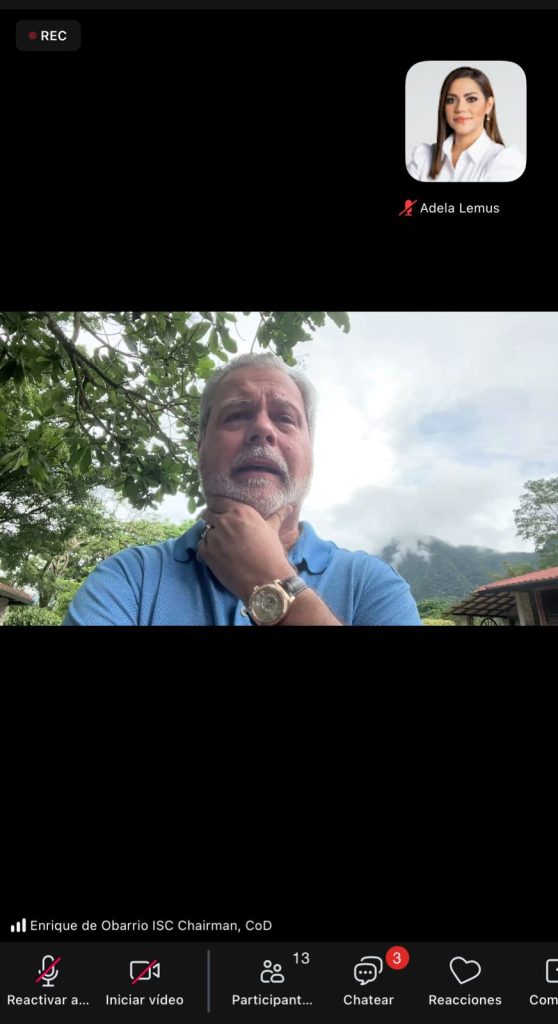
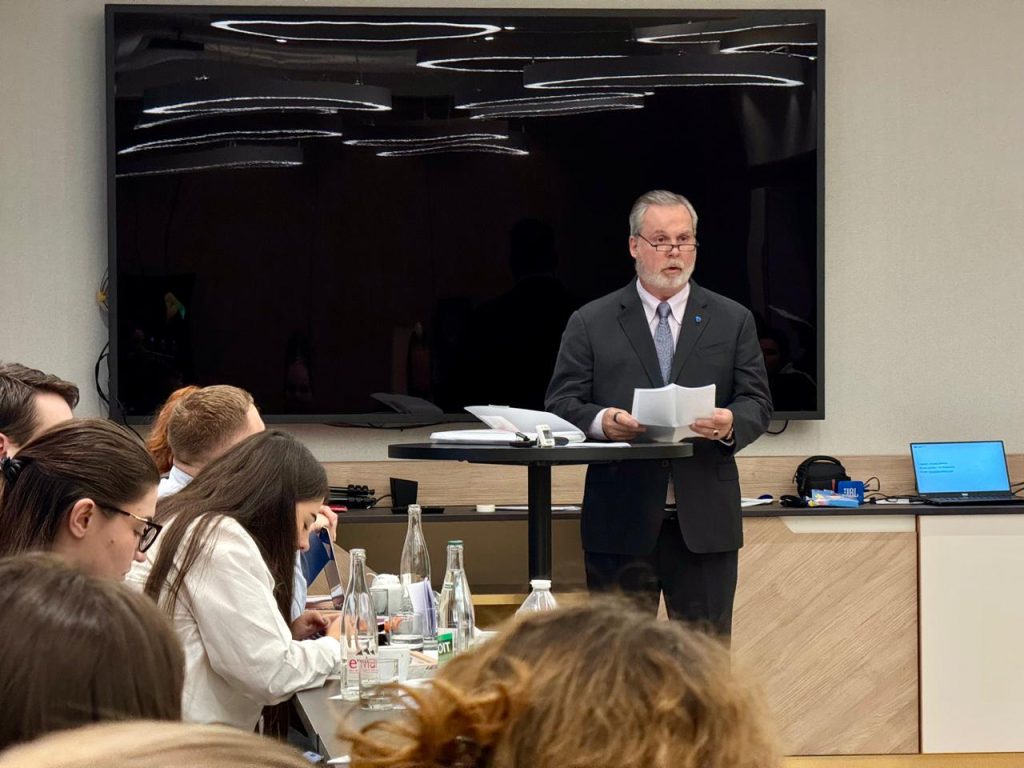
Enrique Arturo de Obarrio, President of the Latin American and Caribbean Network for Democracy (Redlad) and President of the Civil Society Pillar of the Community of Democracies, took part in the official launch of the European Chapter of the Youth Democracy Network (YDN), held in the city of Strasbourg. Invited to deliver the closing remarks, de Obarrio addressed young democratic leaders from across Europe with a firm and thoughtful message, emphasizing that “democracy is not inherited: it is chosen, again and again.”
The event took place in a setting of strong democratic symbolism. Strasbourg, home to the Council of Europe and the European Court of Human Rights, was highlighted by de Obarrio as the democratic and human rights capital of Europe, and as a historical reminder that peace and human dignity are built upon law, institutions, and dialogue among free nations.
In his remarks, the President of Redlad offered a clear diagnosis of the challenges facing democracies today. He noted that democracies rarely collapse suddenly, but rather tend to erode gradually as a result of polarization, disinformation, radicalization, the loss of public trust, and the growing distance between citizens and institutions. In this context, he stressed that dialogue is not a sign of weakness but a republican virtue, and that democratic leadership consists of holding together what is fragile, not deepening divisions.
De Obarrio underscored the need for a multi-stakeholder approach to defending and strengthening democracy. No single actor, he emphasized, can do it alone. Governments, civil society, the private sector, academia, the media, workers, and youth must act together, on equal footing. Within this framework, he highlighted the role of the Youth Democracy Network as a space that combines innovation with democratic responsibility, and that recognizes young people not as spectators, but as protagonists.
Drawing from the Latin American experience, de Obarrio referred to the situation in Venezuela as a lesson of global relevance. He recalled that sovereignty ultimately belongs to the people, and that no regime can claim legitimacy when it systematically suppresses the will of its citizens. In this sense, he affirmed that democracy can be delayed, but not erased, when societies refuse to give up their right to decide their own future.
The message also linked the European context with hemispheric and global developments. De Obarrio noted that Panama holds the Presidency of the Community of Democracies throughout 2026, coinciding with the bicentennial of the Amphictyonic Congress of 1826 convened by Simón Bolívar—a historic milestone in multilateral cooperation and an intellectual precursor to the Organization of American States and, indirectly, the United Nations. That legacy, he recalled, was grounded in the idea of free republics united by citizen sovereignty and the rule of law.
Finally, he emphasized the inseparable relationship between democracy and multilateralism: democracy gives legitimacy to multilateralism, and multilateralism, in turn, protects and strengthens democracy. In his closing message, de Obarrio called on the young members of the new European Chapter of the YDN to embrace their role with both responsibility and confidence. “You are not observers of democracy’s future,” he concluded. “You are the ones who must choose it and make it count, again and again.”